How to Choose the Right Canada Niagara Falls Tour
Choosing a Canada Niagara Falls tour starts with a simple question: what kind of day do you want? The falls can be enjoyed in many ways, from a relaxed look at the cascades from safe viewing areas to a fuller outing that includes nearby attractions. A good choice depends on your time, budget, mobility, and the way you like to travel. Niagara Falls Tour is one name readers may come across while comparing options, but the name alone is not enough. Look closely at the plan, the route, and the small print before you decide.
Start with the amount of time you have
Time is the easiest filter. If you only have a short window, focus on the core falls viewpoint and skip anything that needs long transfers or tight timing. A half day can work well when the main aim is to see the falls from both sides and take in the scale of the water. A full day leaves room for a boat ride, a walk along the river, or a visit to a nearby lookout.
Check the start and finish points carefully. A tour that begins near your hotel or a central meeting point may save more time than one with a slightly shorter itinerary but a distant pickup. Also look at the end point. If it finishes in a different area, make sure the trip home is easy to arrange. A plan that looks convenient on paper can feel rushed if you spend much of the day crossing between pickups.
For travellers arriving by train, bus, or car, the first step is to map the day around arrival and departure times. Leave a buffer. Weather, traffic, queues, and border formalities can all add time. A schedule packed to the minute may be fine in quiet conditions, but it can create stress when one part runs late.
Decide which side of the falls matters most
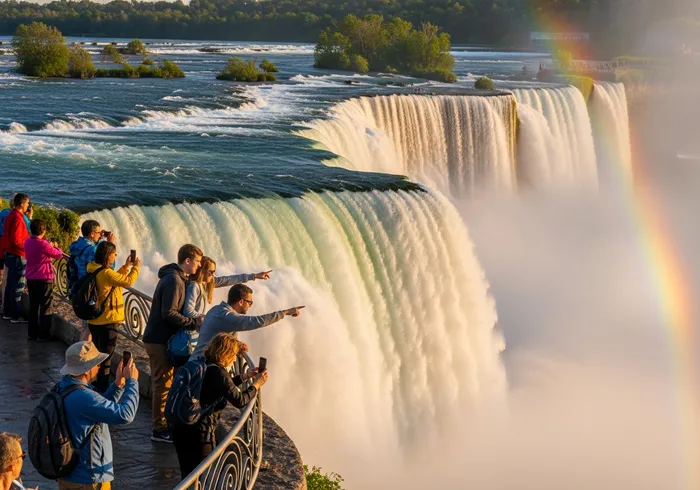
Niagara Falls sits on the Canada and United States border, and each side offers a different view. The Canadian side is often chosen for broad panoramic views of the Horseshoe Falls. The American side has close views of Bridal Veil Falls and the smaller Goat Island area. Some visitors want both. Others prefer one side so they can move at a calmer pace.

When comparing plans, check whether border crossing is included in the route and what documents are needed. Requirements can change, so confirm them before travel rather than relying on old advice. Passports or approved travel documents are commonly needed for crossing between the two countries. If anyone in your group has uncertain paperwork, choose a plan that stays on one side.
Think about the viewing style too. Some tours use coaches, some use smaller vehicles, and some combine transport with short walks. Coaches can be steady value and suit groups, while smaller vehicles may feel more flexible. Walks give you time near the water but require comfortable shoes and a reasonable level of mobility. A Niagara Falls Tour that mixes several styles can be appealing, yet it can also become tiring if the stops are too close together.
Match the itinerary to your interests
The best plan is not always the fullest one. Read the route as a sequence of experiences rather than a list of famous names. If your main interest is photography, look for stops at viewpoints with clear sightlines and enough time to set up a shot. If you travel with children, shorter stops and fewer transfers may matter more. If you prefer history, look for commentary or visits that explain how the falls shaped the region.
Watch for attractions that are listed as optional. A boat ride, cave walk, observation tower, or museum stop may sound appealing, but each one adds time and cost. Some are seasonal, and some may close due to weather or maintenance. A reliable plan should say what happens if an attraction is unavailable. If the wording is vague, ask before booking.
Also think about the pace of the day. A route with many short photo stops can be fun, but it may leave little time to simply stand and take in the falls. A slower plan with two or three strong stops often feels better than a crowded schedule. The falls are powerful and change with light and weather, so giving them space is part of the experience.
Check what is included and what is not
Inclusions are where two similar looking tours can differ sharply. Start with transport. Is pickup and drop off listed, or only the main route? Are entrance fees covered? Is there a guide, and if so, what does that role involve? Some guides give detailed commentary, while others mainly manage timing and directions. Neither is wrong, but expectations should match the day you want.
Meals are another point to check. A tour may include a meal, a snack stop, or only time for lunch at your own expense. If you have dietary needs, do not assume they can be met without advance notice. The same applies to young children, older travellers, and anyone who needs step free access. Look for clear access details before booking, especially at lookouts, boat boarding areas, and older attractions.
Read the cancellation terms and the rules for changes. Plans can shift because of weather, flight delays, illness, or border issues. Clear terms make those situations easier to handle. Pay attention to what happens if the operator changes the route, if a minimum number of travellers is required, or if a stop is removed. These details rarely feel important until something changes.
Compare the group size and travel style
Group size changes the feel of a day. A larger coach can be efficient and steady, with a clear schedule and a set route. A smaller group may allow more flexibility, but it can also depend heavily on the pace set by other travellers. Neither option suits everyone. Consider how you handle waiting, noise, and frequent group movements.
Check whether the day is fully guided, partly guided, or mostly independent transport between stops. A guided plan suits people who want context and clear direction. A looser plan suits travellers who prefer to linger at a viewpoint or skip a stop. If the route includes free time, see how long it lasts and whether it is enough for a meal, a short walk, or a photo stop.
Niagara Falls Tour may appear among the options during research, but compare it in the same way as any other choice. Look at the itinerary, the meeting arrangements, and the terms rather than the label. A clear plan is easier to judge than a broad promise.
Look at reviews with a careful eye
Reviews can help, but they are most useful when read for patterns. One late start may be a rare event. Repeated comments about rushed stops, unclear meeting points, or poor communication are more telling. Look for reviews that describe the actual sequence of the day, not just a general impression.
Pay attention to reviews from travellers with similar needs. A family with young children may notice different issues than someone travelling alone. A person with limited mobility may flag steps or long waits that others do not mention. Recent reviews are usually more useful than older ones because routes, attractions, and rules can change.
Be cautious with vague praise or vague complaints. Specific comments are easier to act on. If several reviews mention the same strength, such as clear timing or a well paced route, that can be a good sign. If several mention the same problem, treat it as a practical warning rather than a minor detail.

Book with the details settled
Once you have narrowed the choice, confirm the practical points before paying. Check the date, start time, meeting place, included stops, document requirements, and cancellation terms. Make sure every traveller in the group can follow the route, especially if there are walks, stairs, boat boarding areas, or long periods standing.
Save the booking details in a place you can access while travelling. Note the meeting point in plain language, including nearby landmarks, so you are not relying on a map alone. On the day, arrive a little early. Many plans run to a fixed timetable, and late arrivals can disrupt the whole route.
Choosing well is less about finding the most famous name and more about matching the day to your needs. Set your time limit, choose the side or sights you care about, read the inclusions, and judge reviews for patterns. With those points checked, a Canada Niagara Falls tour is much easier to compare, and the day is more likely to feel smooth from the first viewpoint to the last stop.